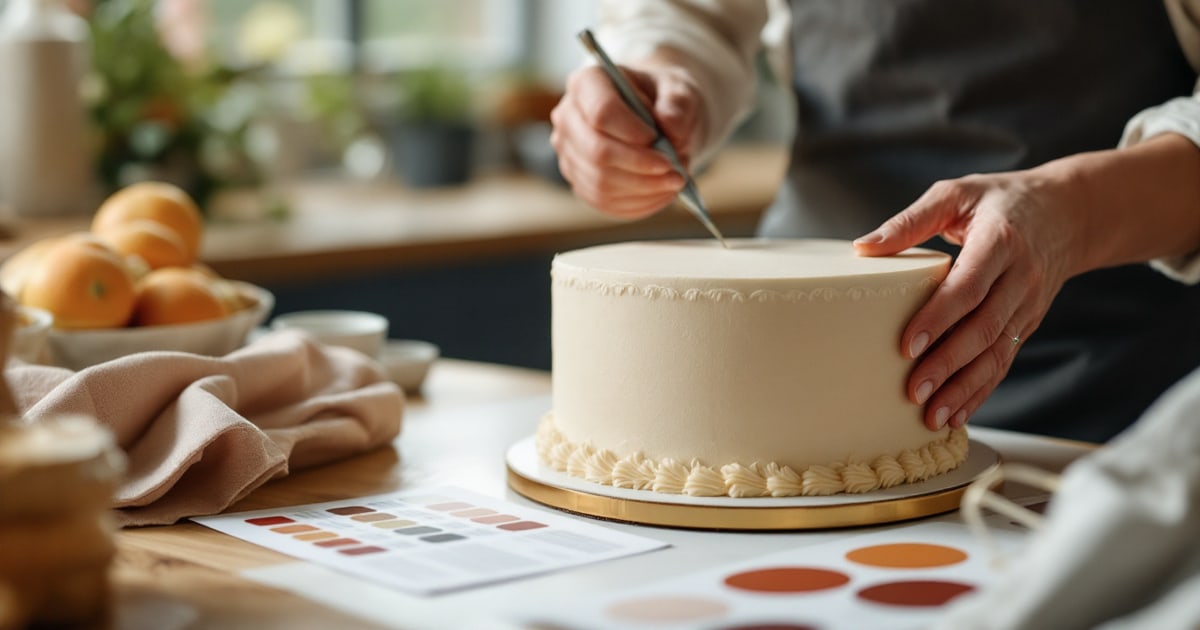
Custom orders are the highest-margin thing most bakeries sell and the easiest to get wrong. The failure is almost never the baking. It is a detail that was said out loud, written on a sticky note, and never made it to the person holding the piping bag.
Every custom order passes through the same stages. What varies is how much information survives each handoff.
1. Capture the brief once, completely
The enquiry usually arrives by phone, message or someone standing at the counter. Whatever the channel, the same facts have to be pinned down before anything else can happen:
- Event date and pickup time — not "Saturday", an actual time
- Servings, which is more reliable than a size the customer has guessed
- Flavour, filling and any dietary or allergen requirement
- Inscription, spelled out and read back — this is the single most common error
- Colours, with a reference image where possible
- Contact number, and who is actually collecting
The reason to capture it all at once is that partial briefs generate follow-up calls, and follow-up calls are where details mutate.
2. Quote from cost, not from memory
Pricing custom work from feel is how shops end up doing elaborate orders at close to break-even. The defensible method is to build from ingredient cost plus decoration time, then apply your target margin.
The number people underestimate is decoration time. A hand-piped design might use a few dollars of ingredients and two hours of skilled labour. If your price does not reflect the second number, the order is losing money no matter what the first says.
Rush work deserves an explicit fee rather than quiet resentment. It displaces other production, and pricing it makes that trade visible to the customer.
3. Take a deposit, and record it against the order
Deposits do two things: they cover ingredient outlay, and they meaningfully reduce no-shows. Both matter more on larger orders.
What matters operationally is where the deposit is recorded. If it exists only as cash in the drawer and a note in a book, the balance due at pickup depends on someone remembering. Recorded against the order, it is simply visible.
4. Confirm the design before anyone bakes
For anything beyond a simple round cake, get explicit sign-off on the design before production starts. A sketch, a reference photo, or a written description the customer has confirmed back.
This is not bureaucracy. It is the difference between "this is not what I asked for" being a conversation about a documented brief and a conversation about two people's memories.
5. Hand off to the decorator with everything attached
The person decorating needs the full brief in front of them: inscription spelling, colours, allergens, due time, and any reference image. Not a summary, and not a name they have to look up.
Allergen information especially must travel with the order rather than living in the order-taker's head. A nut allergy noted at the counter and not passed along is the kind of error that ends a bakery.
6. Make the pickup unambiguous
At pickup, someone needs to know the balance due, that the order is genuinely complete, and who is authorised to collect it. Then the order should be closed out, so it stops appearing on tomorrow's board.
Orders that are never formally closed are why the board slowly fills with work that was finished a week ago.
The failure points, ranked
- Inscription spelling. Read it back at order time and write it exactly as it should appear.
- Pickup time drift. "Saturday morning" and "Saturday at 9" are different commitments.
- Allergens not travelling with the order. The most serious of these by a distance.
- Verbal changes after confirmation. Every change goes on the order, or it did not happen.
- Deposits recorded only as cash. Leads to awkward pickup conversations.
Where DoughOps fits
Custom orders in DoughOps hold the whole brief — customer, event date, pickup time, flavours, inscription, colours and reference images — on one record. Pricing builds from live ingredient cost plus your target margin, deposits and balances are recorded against the order, and decorator assignment carries the full brief rather than a summary.
An AI design assistant can parse a natural-language description into a structured spec and generate a concept image to confirm with the customer before anyone starts baking. Orders move through defined statuses so the board reflects real state, and completed orders can be closed out at the register at pickup.
Common questions
What information should I capture when taking a custom cake order?
Event date and specific pickup time, servings, flavour and filling, allergens, exact inscription wording, colours with a reference image where possible, and contact details including who is collecting. Capturing it in one pass avoids the follow-up calls where details tend to change.
How much deposit should I take on a custom cake?
Enough to cover your ingredient outlay at minimum, taken at order time. Larger and more elaborate orders generally warrant a larger deposit. What matters operationally is recording it against the order so the balance at pickup is not a matter of recollection.
How should I price custom cake work?
Build from ingredient cost plus decoration time, then apply your target margin. Decoration time is the figure most often underestimated — an intricate design can consume hours of skilled labour against a few dollars of ingredients. Rush orders warrant an explicit fee because they displace other production.
How do I stop details getting lost between order and decorator?
Keep one record per order that everyone works from, rather than a sticky note plus a verbal briefing. The decorator should see the exact inscription, colours, allergens and due time without asking anyone. Allergen information in particular must travel with the order.
Keep every custom order detail in one place
DoughOps has a Free plan at $0 for a single baker, then Starter at $49, Pro at $99 and Business at $199 per month. The Free plan needs no card, and a 14-day trial unlocks every feature — when it ends your account moves to Free rather than being locked.
Start Free