
Walk-in retail customers are the lifeblood of most donut shops. But there's a ceiling to how much revenue you can generate from foot traffic alone. Your hours are limited, your display case has finite capacity, and customer demand fluctuates wildly day to day.
Wholesale accounts change the game entirely. A single office account ordering 5 dozen donuts every Friday morning is worth $150-200 per month in predictable, pre-committed revenue. Land three or four of those and you've added $600-800 to your monthly baseline before you even unlock the doors for retail customers.
Types of Wholesale Customers
Not all B2B customers are created equal. Understanding the different types helps you target the right prospects and tailor your approach.
Coffee Shops and Cafes
These are often your best wholesale customers. They need fresh pastries daily but don't want to hire bakers. You deliver fresh donuts each morning before they open, they mark them up 50-100%, everyone wins.
Typical order: 2-4 dozen daily
Frequency: 6-7 days per week
Margin: Lower per-unit price, but volume and consistency make up for it
Corporate Offices
Offices love bringing in donuts for Friday morning meetings, monthly birthdays, or just to boost morale. Once you're the "donut person" for a company, reorders become automatic.
Typical order: 3-8 dozen per order
Frequency: Weekly to monthly
Margin: Full retail or near-retail pricing
Hotels and B&Bs
Properties that include breakfast need a reliable pastry supplier. They want the same items delivered at the same time every single day without fail.
Typical order: 2-5 dozen daily
Frequency: Daily, 365 days per year
Margin: Medium pricing, ultra-reliable revenue
Catering Companies and Event Planners
These customers place large orders infrequently, but those orders can be massive. Wedding brunches, corporate events, conferences - when they need donuts, they need hundreds.
Typical order: 10-50 dozen per event
Frequency: Sporadic but high-value
Margin: Premium pricing, advance notice required
Grocery Stores and Convenience Shops
Regional chains or independent stores often want local bakery products to differentiate from national competitors. This requires proper licensing and insurance, but the volume can be substantial.
Typical order: 5-20 dozen per delivery
Frequency: 3-7 days per week
Margin: Lowest per-unit, highest total volume
Finding Wholesale Prospects: Beyond Word of Mouth
Most donut shops wait for wholesale customers to come to them. The successful ones actively hunt for opportunities.
Drive Your Delivery Route
This old-school method still works. Drive a 5-mile radius around your shop and look for businesses that could use your products. See a coffee shop with a sad-looking pastry case? Write down the address. Notice a new office building going up? That's 200 potential corporate customers in one location.
Use Local Business Directories
Google Maps, Yelp, and Chamber of Commerce directories are goldmines. Search for "hotels near me," "event venues," "catering companies," "corporate offices." Build a target list of 50-100 businesses, then start working through it systematically.
Attend Local Business Events
Chamber of Commerce mixers, business networking events, local festival planning meetings - these are where you meet decision-makers face-to-face. Bring samples. People who taste your product are far more likely to become customers than those who only receive an email.
Use Discovery Tools
Modern mapping technology can help you find prospects you'd never discover on your own. Search by business type within a specific radius, get contact information, and build your pipeline efficiently.
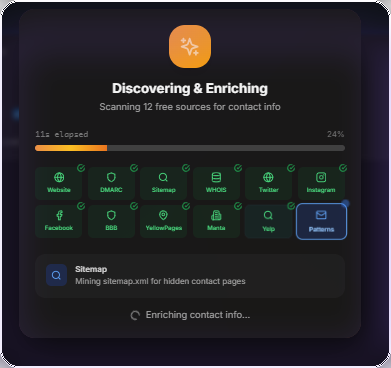
Automatic prospect enrichment scans 12 free sources for contact info
Smart Prospect Discovery
DoughOps includes a B2B prospect discovery tool that searches OpenStreetMap for businesses near your shop. Filter by type (cafes, hotels, offices), set your radius (5-100 miles), and add prospects to your CRM with one click.
See their address, contact info, estimated size, and more - all without leaving the platform. No more driving around with a notepad or manually searching Google Maps for hours.
Ready to reduce waste and boost profits?
Book a DoughOps demo to see the workflow in your bakery.
Book a DemoBuilding a Sales Pipeline That Actually Works
Finding prospects is step one. Converting them to paying customers is where most shops struggle. The key is treating B2B sales like a process, not a collection of random conversations.
Stage 1: Lead Capture
Every business you identify goes into your system as a lead. Name, contact info, business type, estimated value. Don't rely on sticky notes or random scraps of paper - you will lose them.
Stage 2: First Contact
Reach out within 48 hours of identifying a lead. Email is fine, but phone is better. Your goal: get a conversation scheduled or permission to send samples.
"Hi, I'm [Name] from [Your Shop]. We supply fresh donuts to several coffee shops in the area and wanted to see if you'd be interested in a free sample tray to try out our products?"
Most people say yes to free samples.
Stage 3: Follow-Up
This is where deals die. You drop off samples, they say "we'll be in touch," and then... nothing. You forget to follow up, they forget you exist, the opportunity dies.
Set a reminder to follow up 2-3 days after delivering samples. If they're interested, great. If not, ask why. You might learn that your pricing is too high, or they just signed a contract with someone else, or they didn't realize you deliver - all fixable problems.
Stage 4: Proposal and Pricing
Once you have interest, send a professional proposal. What products, what quantities, what price, what delivery schedule. Make it as easy as possible for them to say yes.
Most B2B customers appreciate volume discounts. A dozen donuts might be $15 retail, but if someone's ordering 10 dozen per week, you can offer $12-13 per dozen and still make great margins.
Stage 5: Negotiation and Close
Expect some back-and-forth. They want a lower price, earlier delivery, net-30 terms. Decide in advance what you're willing to negotiate on and what's non-negotiable.
Stage 6: Ongoing Account Management
Once you land the account, the real work begins. Deliver on time, every time. Maintain consistent quality. Check in regularly to see if they need anything different. A happy B2B customer will refer you to other businesses and increase their order size over time.
Complete B2B Sales CRM
DoughOps includes a full-featured B2B CRM built specifically for wholesale food sales. Track prospects through your pipeline (Lead → Contact → Proposal → Won), log every interaction, set follow-up reminders, and never let an opportunity fall through the cracks.
Send professional emails directly from the CRM, track open rates, and automate follow-up sequences. Convert prospects to accounts with one click, then manage ongoing orders and invoicing without re-entering anything.
Email Nurturing: The Secret to Long-Term Success
Not every prospect is ready to buy immediately. Maybe they're locked into a contract with another supplier. Maybe their budget is frozen until next quarter. Maybe they just need more time to think.
This is where email drip campaigns shine. Instead of calling every prospect every week (annoying), you set up a series of helpful emails that go out automatically over time:
- Day 1: Introduction email with your product offerings
- Day 3: Customer success story - "How we help [similar business]"
- Day 7: Free sample offer
- Day 14: Educational content - "5 Ways Fresh Donuts Boost Office Morale"
- Day 30: Special offer for new accounts
The prospects who aren't ready today might be ready in 2-3 months. Drip campaigns keep you top-of-mind without being pushy.
Managing Wholesale Operations
Once you have wholesale accounts, you need systems to manage them efficiently:
Separate Production Planning
Your retail forecast is based on walk-in traffic and historical patterns. Your wholesale production is based on confirmed orders. Keep these separate in your planning so you don't mix up a coffee shop's standing order with your retail display case needs.
Order Management and Invoicing
Track who ordered what, when it's being delivered, payment terms, and outstanding balances. You need this organized before you scale - trying to manage 10 wholesale accounts on paper is a recipe for disaster.
Delivery Scheduling
Map out your delivery route efficiently. If you can deliver to 3-4 accounts in one trip instead of making four separate trips throughout the week, you save significant time and gas money.
Communicate delivery windows clearly. If you promise delivery by 7 AM, you better deliver by 7 AM. B2B customers don't have the flexibility that walk-in retail provides.
The Bottom Line on Wholesale
Building a wholesale business takes effort up front, but the payoff is substantial. Predictable recurring revenue lets you plan production more accurately, reduce waste, and smooth out the peaks and valleys of retail traffic.
Start small - land one or two accounts and deliver exceptional service. Use those wins as case studies to land more accounts. Track your pipeline religiously so opportunities don't slip away. And remember: most sales happen after the third touchpoint, so persistence pays off.
The donut shops growing fastest aren't just waiting for walk-in customers. They're actively building wholesale accounts that provide a stable foundation for growth.
Ready to reduce waste and increase profits?
DoughOps helps donut shops track waste, fine-tune production, and make data-driven decisions that boost profitability.
Book a Demo